

How Long Does It Take to Learn to Surf? A Realistic Beginner Timeline
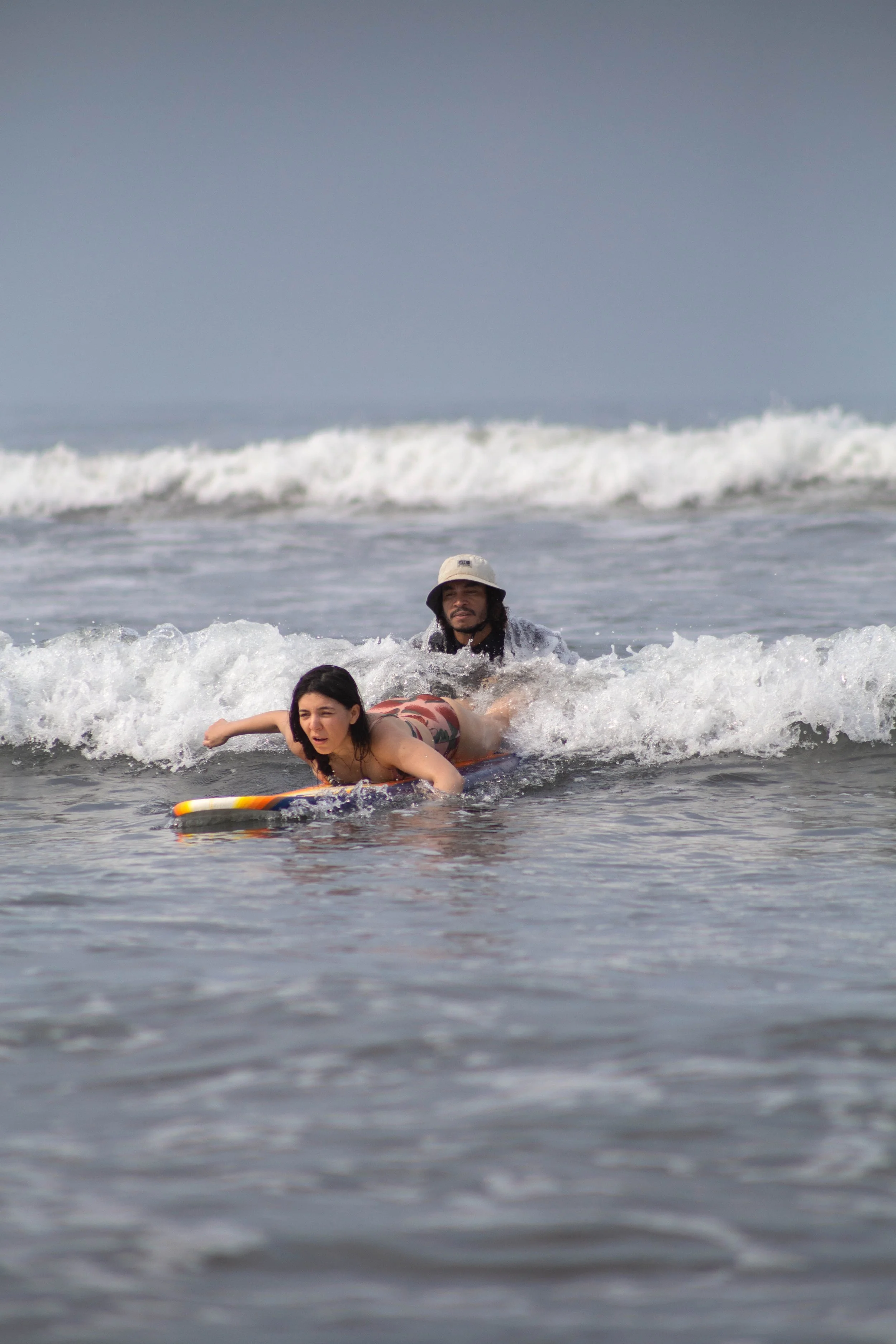
It's the question almost every new surfer asks: how long does it actually take to learn?
The honest answer is that it depends — on how often you surf, the conditions, and whether you have guidance. But there are realistic milestones most people hit, and understanding them helps set expectations (and saves a lot of frustration).
Here's a grounded timeline for learning to surf, and why an immersive week can compress months of slow progress into days.
First, What "Learning to Surf" Actually Means
Surfing isn't a single skill you switch on — it's a series of milestones:
Standing up and riding whitewater (broken waves) to shore
Catching unbroken "green" waves
Angling along the wave rather than straight to the beach
Reading waves and paddling into them on your own
Turning, and developing real control and style
People often say they "can surf" at very different points on this ladder, which is why answers vary so much.

A Realistic Timeline
With that in mind, here's roughly what to expect:
Your first session: Most beginners stand and ride whitewater waves on day one, especially with an instructor.
3–5 sessions: Standing becomes consistent. You start to feel balance and control rather than getting lucky.
1–2 weeks of regular surfing: You begin catching green waves and angling along them. This is a big confidence jump.
A few months of regular surfing: You can paddle into waves independently, read conditions better, and start turning.
A year or more: Genuine comfort and control in a range of conditions.
The pattern is clear: the early gains come fast, then it becomes a longer, rewarding journey.
What Speeds Learning Up the Most
Three things accelerate progress more than anything else:
Frequency — surfing several days in a row beats occasional sessions spread over months
The right waves — learning on mellow, beginner-friendly breaks (like those in Nicaragua) builds confidence fast
Coaching — real-time feedback fixes mistakes before they become habits
This is exactly why a surf retreat works so well. Instead of one lesson every few weeks, you're in the water daily, with guidance, on waves suited to your level. We make the full case in Why a Surf Retreat Is the Best Way to Improve Your Surfing.

Why a Week Can Feel Like Months of Progress
When you surf once a week at home, much of each session is spent re-learning what you forgot since last time.
When you surf every day for a week, that re-learning disappears. Each session builds directly on the last, and your body retains the movement. Most people are genuinely surprised how much they improve in just five to seven consecutive days — far more than the same number of scattered sessions would deliver.
Does Age or Fitness Matter?
Less than you'd think. Surfing rewards persistence and comfort in the water more than raw athleticism, and people of all ages learn successfully. Basic swimming ability and a willingness to keep paddling back out are the real requirements. If you're starting from scratch, our Beginner's Guide to Surfing in Nicaragua is a good next read.
Final Thoughts
So, how long does it take to learn to surf? You can ride your first waves on day one, feel real confidence within a week or two of regular surfing, and spend a lifetime enjoying the deeper skills after that.
If you want to skip the slow, scattered start, the fastest path is simple: surf consistently, on the right waves, with guidance — which is exactly what an immersive week gives you.
Ready to fast-track your progress?