
Surf Lessons in Nicaragua: What a Beginner Lesson Actually Looks Like
Booking your first surf lesson can feel a little intimidating. Will you be able to stand up? Is the ocean safe? What if you're the only beginner?
The good news: Nicaragua is one of the most beginner-friendly places in the world to learn, and a well-run lesson is designed to take you from nervous to standing — often in your very first session.
Here's exactly what a beginner surf lesson in Nicaragua looks like, step by step.
Why Nicaragua Is Great for Learning
A few things make Nicaragua ideal for your first lessons:
Warm water year-round, so no thick wetsuit and no shivering
Mellow, sandy-bottom beach breaks that are forgiving when you fall
Uncrowded lineups, especially on the northern coast, so you're not fighting for waves
Consistent conditions, meaning reliable waves to practice on
Together, these create a low-pressure environment where it's genuinely fun to learn.
Before You Get in the Water
A good lesson always starts on the beach, not in the ocean.
Your instructor will usually cover:
Ocean safety — reading conditions, currents, and how to stay safe
Equipment basics — how the board works and how to carry it
The pop-up — practicing the movement from lying down to standing, on dry sand first
Positioning — where to lie on the board and how to paddle
This groundwork is what makes the difference once you're in the water — you're not figuring it out for the first time while a wave is coming.
Your First Waves
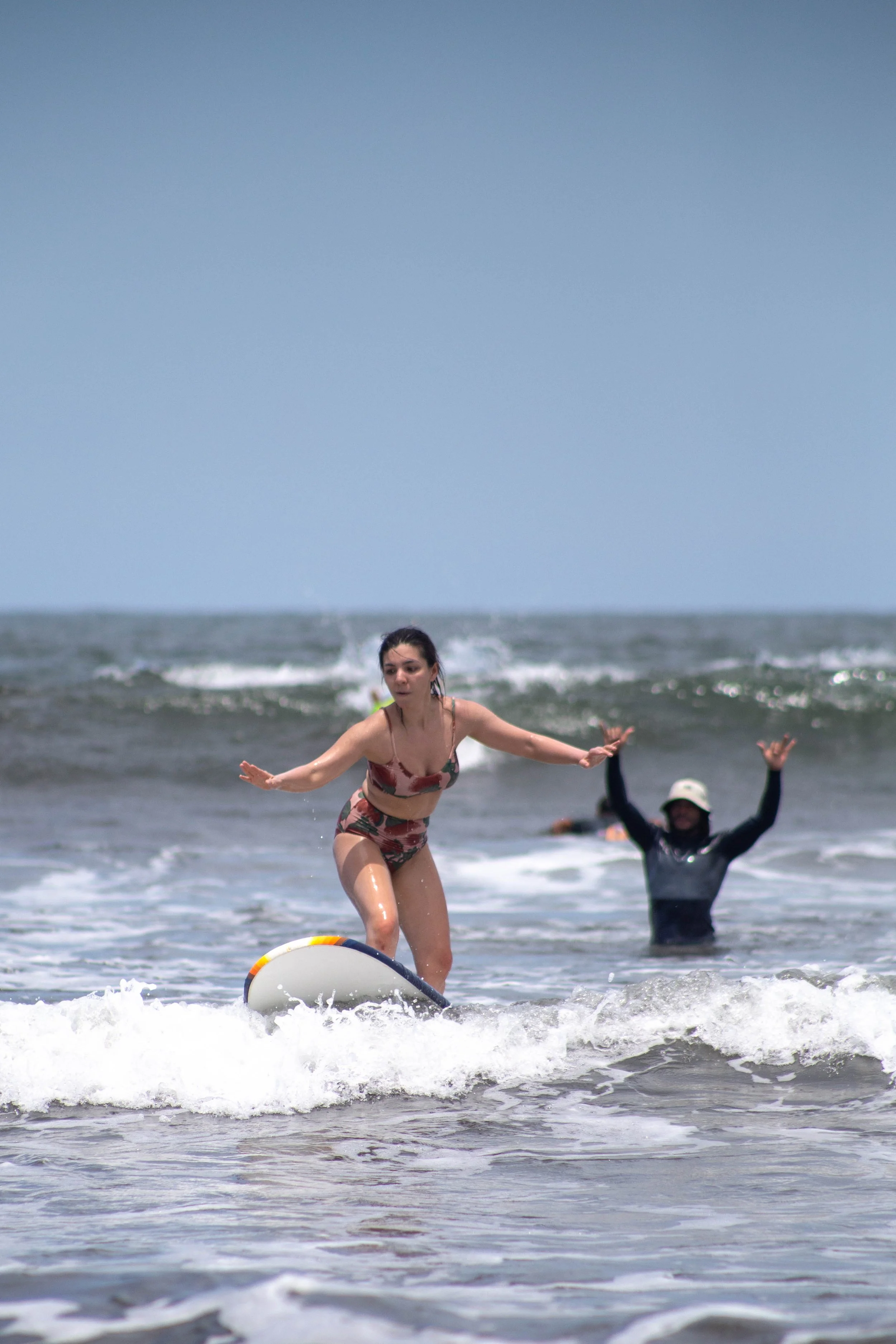
Once you're in the water, your instructor stays close, helping you into beginner-friendly whitewater waves.
In a typical first lesson you'll work on:
Paddling and timing
Popping up to your feet
Finding your balance and riding the wave toward shore
Falling safely (an underrated skill)
Most beginners catch and ride whitewater waves in their first session. From there, progression to unbroken "green" waves comes with practice. We cover the full beginner journey in our Beginner's Guide to Surfing in Nicaragua.
How Long Is a Lesson?
Most beginner lessons run around two hours, which balances enough time to actually practice with not getting so tired your technique falls apart. Surfing uses muscles you don't normally use, so fatigue comes faster than people expect.
Why Lessons on a Retreat Beat One-Off Sessions
A single lesson is a great taster — but if you really want to learn, consistency is everything.
On a surf retreat, you're in the water day after day with the same coaching, on waves matched to your level. That repetition is what turns "I stood up once" into genuine, lasting confidence. A little yoga and mobility work helps too, which we explain in How Yoga Helps Surfers Improve Balance, Recovery, and Mobility.
Do You Need to Be Fit or a Strong Swimmer?
You don't need to be especially fit, but you should be comfortable in the water and able to swim. Surfing will build the relevant strength quickly, and instructors keep beginners in safe, manageable conditions.
Final Thoughts
A beginner surf lesson in Nicaragua is approachable, safe, and genuinely fun — and the warm, uncrowded waves make it one of the best places in the world to start.
Whether you take a single lesson or commit to a week of daily sessions, you'll be amazed how quickly you go from the sand to your first ride.
Ready to catch your first wave?
🌊 Explore beginner-friendly surf retreats at Still Salty Escape